




What is the chemical structure of nylon?
 Sep 10, 2025|
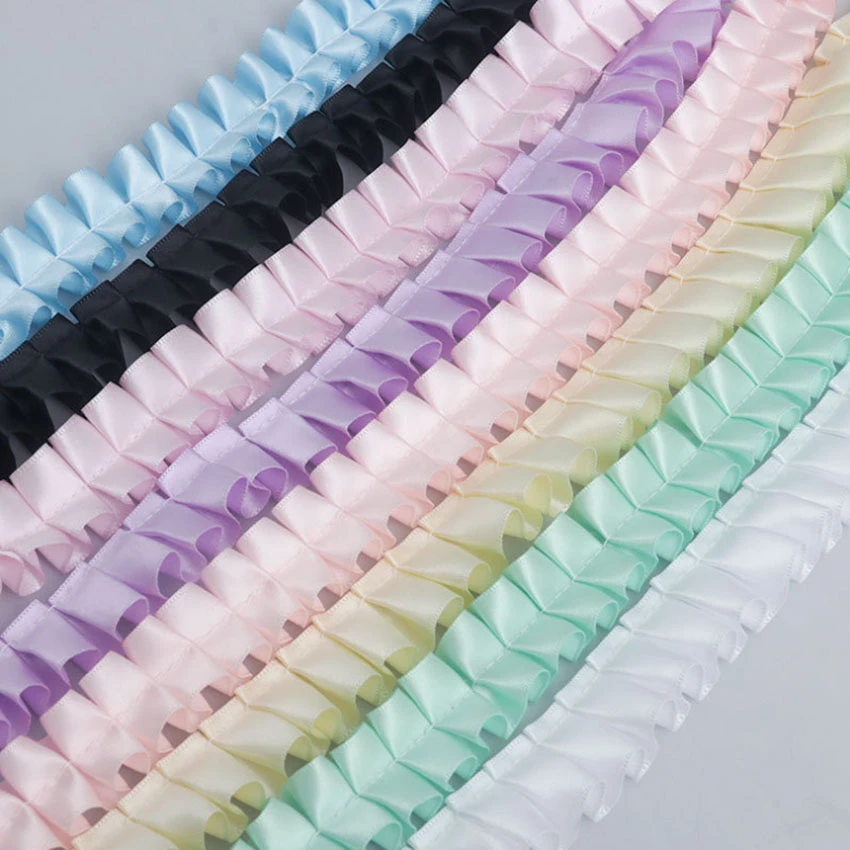
 Nylon is a remarkable synthetic polymer that has found its way into countless applications across various industries. As a nylon supplier, I've witnessed firsthand the versatility and enduring appeal of this material. In this blog, we'll delve into the chemical structure of nylon, exploring its composition, properties, and how it relates to the products we offer, such as Sewing Lace Lace Ribbon, Nylon Round Elastic Cord, and Marshall Lace Ribbons.
The Basics of Nylon: A Synthetic Marvel
Nylon was first introduced in the 1930s by Wallace Carothers, a chemist working for DuPont. It was the world's first synthetic fiber, and its development marked a significant milestone in the field of polymer chemistry. Nylon's success can be attributed to its unique combination of strength, durability, and versatility, which made it an ideal replacement for natural fibers like silk and cotton in many applications.
Chemical Structure of Nylon
Nylon is a type of polyamide, which means it is composed of repeating amide groups. The amide group is a functional group consisting of a carbonyl group (C=O) bonded to a nitrogen atom (N). In nylon, these amide groups are connected by hydrocarbon chains, forming long polymer chains.
There are several types of nylon, but the most common ones are nylon 6 and nylon 6,6. The numbers in the names refer to the number of carbon atoms in the monomers used to make the polymer.
Nylon 6
Nylon 6 is made from a single monomer called caprolactam. Caprolactam is a cyclic amide with a six - carbon ring. The polymerization process involves the ring - opening of caprolactam. When caprolactam is heated in the presence of a catalyst, the ring breaks open, and the monomers link together through amide bond formation.
The chemical reaction can be represented as follows:

n C₆H₁₁NO → [NH(CH₂)₅CO]ₙ
The resulting polymer chain has a repeating unit of -NH(CH₂)₅CO-. Each amide group is separated by a five - carbon hydrocarbon chain.
Nylon 6,6
Nylon 6,6 is made from two different monomers: adipic acid and hexamethylenediamine. Adipic acid is a dicarboxylic acid with six carbon atoms (HOOC(CH₂)₄COOH), and hexamethylenediamine is a diamine with six carbon atoms (H₂N(CH₂)₆NH₂).
The polymerization reaction between adipic acid and hexamethylenediamine is a condensation reaction. During this reaction, a water molecule is eliminated for each amide bond formed.
The chemical reaction is:
n HOOC(CH₂)₄COOH + n H₂N(CH₂)₆NH₂ → [OC(CH₂)₄CONH(CH₂)₆NH]ₙ+ 2n H₂O
The repeating unit in nylon 6,6 is -OC(CH₂)₄CONH(CH₂)₆NH-, where the amide groups are separated by alternating four - carbon and six - carbon hydrocarbon chains.
Physical and Chemical Properties Related to Structure
The chemical structure of nylon gives it several important physical and chemical properties that make it suitable for a wide range of applications.
Strength and Durability
The amide groups in nylon form strong hydrogen bonds with each other. These hydrogen bonds hold the polymer chains together, giving nylon its high tensile strength. The long hydrocarbon chains also contribute to its strength by providing flexibility and resistance to breakage. This strength and durability make nylon an excellent choice for products like Nylon Round Elastic Cord, which needs to withstand stretching and repeated use.
Crystallinity
Nylon can exist in both crystalline and amorphous regions. The regular arrangement of the polymer chains in the crystalline regions contributes to its high strength and stiffness. The amorphous regions, on the other hand, provide flexibility and toughness. The balance between crystallinity and amorphousness can be controlled during the manufacturing process, allowing for the production of nylon with different properties.
Solubility and Chemical Resistance
Nylon is insoluble in most common solvents, such as water, ethanol, and acetone. This is due to the strong intermolecular forces (hydrogen bonds) between the polymer chains. However, it can be dissolved in strong acids and some polar solvents like formic acid. Nylon also has good chemical resistance to many chemicals, making it suitable for use in harsh environments.
Moisture Absorption
Nylon has a certain degree of moisture absorption due to the presence of amide groups, which can form hydrogen bonds with water molecules. This moisture absorption can affect the physical properties of nylon, such as its dimensions and strength. However, it also gives nylon some desirable properties, such as comfort in clothing applications, as it can absorb and release moisture, keeping the wearer dry.
Applications of Nylon Based on Its Structure
The unique chemical structure of nylon makes it suitable for a wide variety of applications.
Textile Industry
In the textile industry, nylon is used to make a variety of products, including Sewing Lace Lace Ribbon and Marshall Lace Ribbons. Its strength, durability, and elasticity make it ideal for these applications. Nylon lace and ribbons are often used in clothing, lingerie, and home decor. They can be easily dyed to achieve a wide range of colors, and their smooth surface gives them an elegant appearance.
Engineering Plastics
Nylon is also widely used in the production of engineering plastics. Due to its high strength, heat resistance, and chemical resistance, it is used in automotive parts, electrical components, and mechanical parts. For example, nylon can be used to make gears, bearings, and housings.
Fibers for Industrial Use
In the industrial sector, nylon fibers are used in applications such as ropes, nets, and conveyor belts. The high strength - to - weight ratio of nylon makes it an ideal material for these applications, where strength and durability are crucial.
Why Choose Our Nylon Products
As a nylon supplier, we offer high - quality nylon products that are carefully manufactured to meet the specific requirements of our customers. Our products are made from the finest raw materials, ensuring excellent performance and reliability.
Whether you need Sewing Lace Lace Ribbon for your fashion projects, Nylon Round Elastic Cord for your crafts, or Marshall Lace Ribbons for your home decor, we have the right products for you.
Contact Us for Procurement
If you are interested in our nylon products, we encourage you to contact us for procurement. Our team of experts is ready to assist you in choosing the right products for your needs and providing you with the best possible service. Whether you are a small - scale business or a large - scale manufacturer, we can work with you to meet your nylon requirements.
References
- Odian, George. "Principles of Polymerization." John Wiley & Sons, 2004.
- Billmeyer, Fred W. "Textbook of Polymer Science." Wiley - Interscience, 1984.
- Carraher, Charles E. "Polymer Chemistry: An Introduction." CRC Press, 2008.